What's the purpose of this blog?

This blog is dedicated to discussing many different topics, from race, ethnicity, moral values, hot current events and health (among other things) through Food.

Tuesday, October 30, 2007

The lowdown on Ketchup


A photographed moment of the "essence" of ketchup, just in case you missed the blatantly obvious title...


Ketchup, or Catsup, is a condiment made with ripened tomatoes.

That's simple enough, right?
...
not really. this is why i'm spending precious time blogging about a vastly misunderstood condiment instead of studying for my physics midterm. but enough about me, you care about what i have to say about ketchup. right?

Ketchup started out as a general term for sauce typically made of mushrooms or fish brine with herbs and spices. The Malaysians termed it as fish sauce, where elsewhere in eastern asia ketchup was understood to be a tomato sauce. origins of the word are rumored to be chinese in origin, where dialects and pronunciations are very close to ketchup when saying "tomato sauce" in the language.

The term first appeared in western colture in english literature and cookbooks, and the early colonial americans had it as a recipe several cookbooks.

The tomato ketchup as we know it today did not really make an appearance in the western world until America went crazy for tomatoes in the early 19th century, and a traveling salesman named Jonas Yerks popularized ketchup. Somehow.

When the FDA got on the case of ketchup perservation by sodium benzoate and its manufacture in the early 20th century, the Heinz company tinkered and created the sauce as we know it today, a balanced condiment that stimulates all 5 types of taste buds.

Ketchup is a soft solid often used for fries, hamburgers, sandwiches and grilled or fried meat. Ketchup with mayo forms the base of thousand island dressing and fry sauce. Ketchup is also typically used as a base for barbeque sauce, especially in the southern US.

Americans identify with it so much that it has been involved in it's share of controversy in American politics. In 1981 congress tried to issue new standards for school dining programs, attempting to identify Ketchup as a vegetable. Fortunately, that turned out for the best. Remember John Kerry? people made a huge deal about him being tied to heinz ketchup because of his wife, leading some Republicans to create a different brand of ketchup to spite his campaign. Needless to say, that fortunately didn't work out either. (the alternative brand of ketchup , not Kerry's campaign. I'll try and keep political opinion out of it.)

Let's get into the meat of this blog though...

A school of thought maintains that ketchup has a tendency to overwhelm the palate and detract from the overall character of the food you eat, with it's ketchup flavor too overbearing. Not too mention that many food items are well or over-salted and wouldn't require ketchup in that respect. Remember the hot dog people? they belong to this group of people i call the "absolute taste purists" (refer to my post about hot dog etiquitte).

Another school of thought maintains their ideology in one quick statement about ketchup: "put it on if you like it". These people are called "everyone else/the majority of the people in the freakin' midwest".

But yes, just giving you some quick background on ketchup so that you can talk to people about this hot topic that is so darn relevant to your (schmoozing) life. who knows, you might just impress someone with this knowledge. (I mean, when there is nothing else to talk about, of course.)

Saturday, October 6, 2007

Dish of the Day: BiBimBap

Lately i've been really enjoying eating Korean food, just because there are many places on campus to get some and it's so delish (just watched some rachel ray today). there are many aspects to a Korean dish, and you couldn't explain it better than BiBimBap.

BiBimBap is a rice bowl dish that has bulgogi beef, bean sprouts, vegetables, a runny egg piled on top of sticky rice, with lots of korean sweet-hot sauce (optional). served with kimchee and other assorted small dishes, as well as a spoon and chopsticks (metal ones at the nice restaurants)

One of the more well-known Korean dishes in the US, this is a very good all-round culinary experience for people new to the cuisine to sample a little bit of everything.

To begin with, the dish is served with kimchee, which is a loose term for korean-style pickled vegetables and usually lots of spice and garlic. A staple of the korean diet, it adds a bit of spice and kills bacteria. it leaves a good taste in your mouth afterwards (though its takes some getting used to. I knew a kid in elementary school who ate kimchee on rice in his thermos for 5 straight years, so i got accustomed to the smell, which is very brine-y). The vegetables are almost always freshly cooked and are well prepared, as well as there being a good sampling of korean barbequed meat (bugolgi, marinated and grilled goodness, in this instance). overall, I enjoy the sweet, spicy, fresh taste. Dol-Sot BiBimBap, a popular regional version of the dish, utilizes a stone bowl, which is heated and keeps the dish hot for as long as you eat it, which is uncommon for any other dish you might know of and just makes your day a little better.

I encourage you guys to give it a try, it's good food and part of a healthy and kimchee-happy diet.

Mixed Dol-sot BiBimBap, eaten 10/6/07

next time, i shall delve further into my ongoing discourse on the Wendy's eating experience, the dish to be examined: The Sour cream and Chive baked potato.

stay tuned, my only reader.

Tuesday, October 2, 2007

Cooking with dave: Haggis?

it's always interesting to see new kinds of food and such, but every now and then there's something that comes by and blows your mind away.
I stumbled on Dave, a scottish vegetarian that enjoys hunting wild haggis and sticking them in geoorge foreman grills.

(of course you could look up what haggis is on wikiedia, but why not just blindly believe in this funny video?)
...

yub yub, kids.


Tuesday, September 11, 2007

The rice porridge experience

when you hear the word "porridge", you might think about the little red riding hood and how she ate bear porridge, complaining if it was too hot or cold. you might think about oatmeal, grits or some unspectacular looking bowl of goop served lukewarm.

or, if you are Chinese or are familiar with the cuisine, you will without fault think "rice".
rice porridge is quite the popular thing in south and southeast China and other Asian nations because of many reasons:

1. Rice is the main carbohydrate in the region
2. Rice is the main carbohydrate in the region
3. Rice is the main carbohydrate in the region


If you haven't understood the redundancy that has been presented to you, consider that in south-chinese cuisine relies heavily on rice in it's recipes: glutinous sticky rice for dim-sum dishes, rice flour for sweet rice cake desserts, rice noodles, rice water for the sick, etc.

Fun fact: The early construction of the Great wall of China utilized a mortar of lime and glutinous rice mash to keep the stones secure. as the years went by and famines came and went, rice was substituted for a more typical (and non-edible) mix of cement wit hthe advent of brick use in certain portions of wall.

Speaking of the sick, rice porridge was the main food of choice for the infirm and the old/toothless, as the porridge was mild and palatable, had a high water content and would go down well. It was also eaten extensively by the poor population of the region, as rice could expand to almost 3 times it's non-cooked form and fill the stomach faster, thereby saving the amount of rice eaten per person and conserving precious rice (rice was/is very valuable).

It can be garnished with pickled vegetables, spice, hot sauce, meat, fresh and steamed vegetables, green onions, a1 steak sauce, thai peanut sauce, soy sauce, MSG sauce, etc. etc. and is nominally reserved for breakfast.

When cooking, make sure to keep the ratio of rice to water at about 1 cup of rice to 6 cups of water. It is a good idea to keep a close eye on the pot/rice cooker, was the water will begin to flow over as the rice expands. if you're not careful, you'll have sticky rice water embedded in your carpeted dorm room, eventually hardening over time and petrifying any unknowing insect that wades into it.

it happened to me. don't let it happen to you.


Eaten for breakfast, lunch and dinner, May 21
, 2007 (wisdom teeth removed)

Wednesday, August 22, 2007

Term of the Day: Culinary Receptacle

Culinary Receptacle
Noun
Definition:
1. An individual(s) belonging to a collective group(s) of individuals that nominally undertake the role of eating the leftovers, or the undesired portions, of the other group members food.

2. An individual that is wiling to eat food items that exist in adverse conditions.

In terms of human interactions and food, this term can be used synonymously or in conjunction with: Moocher, Meal Eraser, The human doggie bag, The finisher, The janitor, etc.

Case example of a culinary receptacle
in popular entertainment.

I'm sure you've met these kinds of people before, and maybe your group of friends has a guy or gal who's willing to "Man up" to the challenge of taking care of the leftovers... in his/her enzyme-rich digestive tract. This description of individuals usually addresses the insatiable desire and pride of the person to eat various things that he/she happens across, and can range from things that have fallen on the floor, leftovers, mooching someones food, and so on. You can count on them to eat indiscriminately and practice aspects of true food equality. In context, it can be used in a negative connotation or as a joke at the Moocher's expense.

Examples:

Person 1: You gonna eat that?
Person 2: It's a week-old donut that's been on the floor.
Person 1:...So?
Person 2: Take it man. You're such a culinary receptacle.

"My mom keeps putting food onto my plate and expects me to finish up everything. It's like I'm her personal culinary receptacle. "


...for lack of a better visual example.

Thursday, August 16, 2007

Dish of the Day: Phở

Phở at a Vietnamese restaurant in Chicago

(Lunch, 7/21/07)

Phở (pronounced fuh) is a Vietnamese noodle soup dish. Typically, it is composed of rice noodles in clear beef broth, and can typically have thin beef slices, tendon, tripe (intestinal lining), chicken leg, green onions and miscellaneous herbs (basil, mint, etc.). almost always served with a lemon slice and fresh bean sprouts, as well as chili peppers and spicy sauces. While Phở varies depending on the region it is served in, restaurants and stands in the United States usually serve their Phở in the Southern Vietnamese style, which utilizes many herbs and bean sprouts.

Historically, Phở is reputed to have origins from a combination of Chinese and French cuisine. China has always had a great impact on it’s neighboring countries, and the use of spices and herbs in Phở is very reminiscent of Chinese cuisine. The Vietnamese also adapted to their French rulers, where beef stew dishes are common in the cuisine, when they were in control of Vietnam. When the French were defeated and forced to leave, many North Vietnamese refugees came to South Vietnam and introduced it in the 60's. The proliferation of south vietnamese to the United States, Australia, Canada and other parts of the world in this period also brought with it the cuisine, of which Phở was then a prominent and popular dish.

Being a big fan of Udon and various soupy noodle dishes, Phở is one of my favorites, having good value and being very filling as well as being relatively good for your health, while not sacrificing it’s flavor. It can be eaten for breakfast, lunch and dinner. It’s a relative unknown in the midwest, due to the generally small Vietnamese population, although there are typically restaurants and stands in every major urban area in the country, as well as in Canada and Australia. There are numerous Vietnamese stands and eateries in California, where immigrants from Southeast Asia usually come in.


Monday, August 13, 2007

Rachel Ray, Androids and why America needs both.

Rachel Ray is a fairly visible figure in American popular culture. She’s done the rounds on the food network, has two shows, a syndicated lifestyle-talk program, a magazine, cookbooks and an Emmy award. Oprah friggin’ loves her. She has no formal culinary training, but has been bitten by a snake whose venom has frozen her facial muscles into a perpetual smile and never stops talking about EVOO (Extravirginoliveoil teeheehee!), which is why she’s the most visible figures in the culinary TV world. She’s on Nabisco cracker boxes, has a wax statue that doesn’t smile nearly as much as she does, and will endorse everything from burger king to dunkin’ donuts. It doesn’t seem like she ever ages, and she doesn’t seem to have any other emotional programming outside of “perky”. In other words, she’s the most psychotic and well-known androids of all time, beating out the only other successful android in entertainment, Data from Star Trek.


Which one is the android? Are you absolutely sure? Really? REALLY?!

The only good explanation in regards to her personality is that she’s of Italian (Sicilian) descent AND from New York, which essentially means you can’t stop her from talking expressively about anything unless you run her over with a ford F-350, whereupon she might start endorsing Ford trucks that that lug over two tons of dead weight and has more torque than any other vehicle in it’s class.

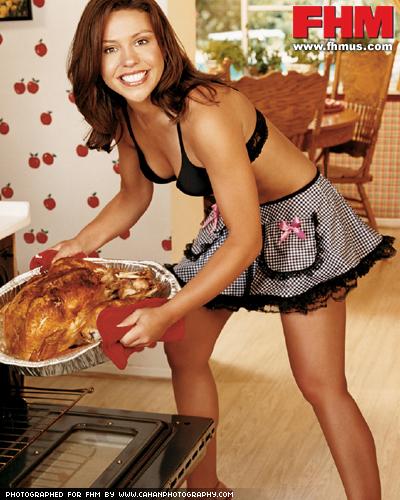
To tell the truth, I had never thought too much about Rachel Ray, had not watched her shows or anything until she appeared in FHM men’s magazine, which I, um, stumbled upon while looking for the Home Gardening magazines at the mag rack. That being said, I started paying attention to her cooking channels on the Food network a little more.

People are very polarized about her cooking style, which doesn’t utilize measuring instruments, requiring you to “eyeball it”. Her recipes supposedly take 30 minutes or less to prepare, and she uses an excessive amount of catchphrases, like "yum-o," "so delish," "G.B." (garbage bowl), "Oh my gravy!", "stoup", and "how good is THAT?".

She is criticized because she has no formal chefs education and doesn’t seem to take cooking seriously, as well as being so consistently enthusiastic about everything that she’s been called a bobblehead by her culinary peers, of which I readily agree.

As much as I could criticize her for being the most pumped android on TV, she definitely is what America needs today. She has contributed to increasing the visibility of cooking in the “eat-out” culture that has often seen as a contributor to American health issues(Eg: Chipotle's huge burritos, fast food, Old country Buffet) . Whether or not people like her, they still pay attention to her and her cooking demos, which is much more than you can expect from renowned TV chefs like Billy Flay.

In conclusion, I would not watch her too much for fear of going crazy and losing my sanity. I appreciate her contributions, but like all things, you can absolutely have your fill of Rachel Ray.

Don't be fooled, guys. She's still a robot.